


Experts told the court that Maxim Kruglov’s posts contained neither assertions about the army’s actions nor hatred
Press Release, 4 June 2026

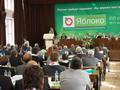
Photo: Maxim Kruglov during the court hearing of 20 May 2026 / Photo by the Yabloko Press Service
At the fourth hearing in the case of Maxim Kruglov, held on 3 June, philologist Igor Zharkov and psychologist Veronika Konstantinova gave evidence. At the request of Maxim’s defence, they had conducted a psychological and linguistic expert assessment of the social media posts that subsequently served as the basis for opening a criminal case against the politician.
The findings of the assessment are unambiguous: Kruglov’s posts contain not only no assertions of any kind regarding the use of Russian armed forces, but also no hatred of the kind attributed to him, the words published speak exclusively of personal suffering, empathy, and bewilderment. The author of the words (that is, Maxim Kruglov) does not identify with any social group and does not express any attitude towards another social group in the published posts: in them, he is living through a personal tragedy, one bound entirely to events in the country and beyond its borders.
Kruglov’s posts contain no distortion of the official position of the Ministry of Defence either, the assessment states.
The first to address the court on 3 June was linguist Igor Zharkov, who explained his part of the expert assessment and its conclusions. He spoke in detail, in particular, about UN data concerning civilian casualties cited in one of Kruglov’s posts. A UN report had recorded 1,276 deaths, yet the politician had written 1,267; however, “this typographical error does not result in any material distortion,” the expert clarified. Zharkov also noted that the defendant had correctly cited official statements by the Russian Ministry of Defence, in particular, a briefing on the events in Bucha in 2022.
Igor Zharkov separately explained to the court the term “knowingly false” — since, under the charges against him, Kruglov stands accused precisely of publicly disseminating knowingly false information (committed on grounds of “political hatred”). When a person reports something with reference to a source of information, even in an affirmative form, that person “does not present the information in a way that implies he knows it to be definitively true,” the expert stressed.
On the question of “political hatred”, Zharkov observed that no posts can unambiguously establish their author’s motives. However, the absence of any markers of hatred in a given text can serve as evidence against such a motive, the expert noted. Kruglov’s texts contain no hatred whatsoever, he reiterated, citing the conclusions of the assessment.
Prosecuting counsel Yulia Guznyaeva, during the questioning of the witness, asked Igor Zharkov whether he had signed a non-disclosure undertaking regarding the case materials. No such undertaking had been signed, the witness replied.
Psychologist Veronika Konstantinova then gave evidence. She explained at the outset that she had examined Kruglov’s posts not for their veracity but for “intent to deceive”. No such intent was present; the expert stated with confidence, however, that Maxim Kruglov’s posts conveyed a clear “desire to share his feelings”.
Since 2022, when the special military operation began, cases had appeared in Konstantinova’s practice, she told the court, in which “the motive of political hatred was visible to the naked eye”. The Kruglov case, however, is not among them: his posts show “a very cautious, very measured” expression of personal feeling, and “say nothing about who is to blame”. Nor do they contain any markers of inter-group confrontation or conflict, or any markers of incitement to hatred, or hate speech.
An “irrational sense of guilt” was something Veronika Konstantinova, as a practising psychologist, had begun to encounter increasingly frequently among her patients — also since 2022. This state is accompanied in people by a desire to share, to write, or to speak publicly, the expert explained.
In response to a question from Maxim Kruglov as to whether ordinary disagreement with the policies of the current authorities could properly be equated with political hatred, Konstantinova answered unequivocally: no. Such an equation is not only improper but “entirely unscientific,” the expert said, since “agreement or disagreement [with anything] has no connection with hatred whatsoever”.
Once the examination of witnesses was concluded, the court granted the defence’s application to add to the case materials a character reference for Maxim Kruglov, provided by priest Dmitry Pyatunin, rector of the Church of the Great Martyr Alla of Gothia.
The defence also asked the court for renewed assistance in summoning individuals previously mentioned by prosecution witnesses — activists of the pro-government United Russia political party — for examination. The court agreed to assist and to reissue the summonses.
The next hearing in the case of Maxim Kruglov will take place on 17 June.
Posted: June 5th, 2026 under Freedom of Speech, Governance, Human Rights, Judiciary, Yabloko's Regional Branches, Без рубрики.