Is
Modernisation in Russia Possible? Interview
with Grigory Yavlinsky and Boris Titov by Yury Pronko,
"The Real Time" programme, Radio Finam, May
12, 2010
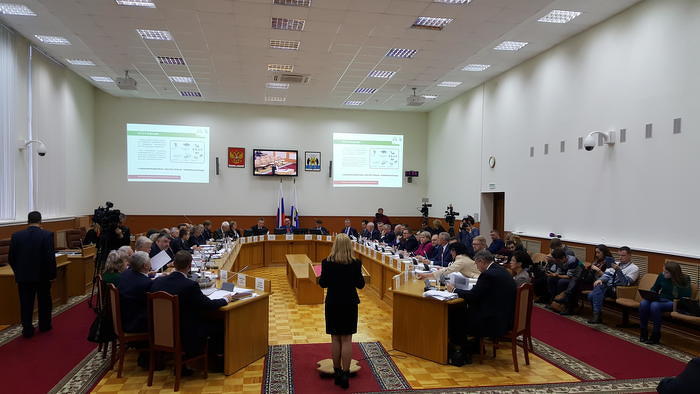
Yabloko Chair Emilia Slabunova arrived in Veliky Novgorod, North-West Russia, to support Anna Cherepanova, Chair of the regional party branch and an MP in the Veliky Novgorod City Duma, who is running for the city mayor position. The mayor is appointed by the city parliament MPs because direct mayoral elections were cancelled. Regional Yabloko branch insists on the reintroduction of direct mayoral elections, and Anna Cherepanova introduced the initiative to the city parliament more than once. However, she put herself forward as a mayoral candidate to be considered on the competition basis. Cherepanova applied for the post along with nine other candidates. Today she presented her programme to the regional MPs.Read more »
Deputy Head of Yabloko Centre for Anti-Corruption Policy on the case of officials Obnosov and Prikhodko Alexei Karnaukhov’s blog post on Ekho Moskvy website, 9.11.2018
The cases of officials Obnosov and Prikhodko and the commercial interest of their families in space industry revealed by Novaya Gazeta have clearly shown three major problems of anti-corruption policy in our country.
Image: Boris Obnosov and Dmitry Medvedev. By RIA Novosti
A conference in memory of Alexei Yablokov, a renowned environmental scientist and founder of Yabloko’s Green Russian Faction, is bing held at Moscow’s Darwin Museum. Live broadcast is available. Colleagues, followers and students of the famous scientist participate in the conference. The premiere of the film about Alexei Yablokov will take place later this evening.
Yabloko Chair Emilia Slabunova demanded that Alexander Bastrykin, Chairman of the Investigative Committee of the Russian Federation, take the investigation into the attack on Adam Medaliyev, one of the party leaders in Kabardino-Balkaria, under his personal control. On 7 November, unidentified assailants attacked him, beat him, and set his car on fire in the evening of the same day. Read more »
Adam Medaliyev, one of Yabloko leaders in the Republic of Kabardino-Balkaria, was attacked late 7 November.
When Medaliyev arrived at his house on the outskirts of Nalchik two unidentified persons in medical face masks called him, knocked him down, and began beating him. One of the attackers had a baseball bat. However, Medaliyev managed to do a knees-to-chest pose and show resistance. The attackers got away in a car without a number plate.
Adam Medalieyev, Yabloko Chair Emilia Slabunova, Chair of Kabardino-Balkarian Yabloko branch Khakim Kuchmezov
Decision by Yabloko Federal Political Committee, 25.10.2018
Yabloko is the party of the European values. Yabloko has abided by democratic principles and employed lawful methods to gain power and political influence since the time the party was founded 25 years ago.
We are the party of public affairs, we participate in elections and use parliamentary mechanisms. Read more »
On 12 November, Yabloko Centre for New Municipal Policy will deliver a lecture on municipal improvement for deputies of local councils and civil activists.
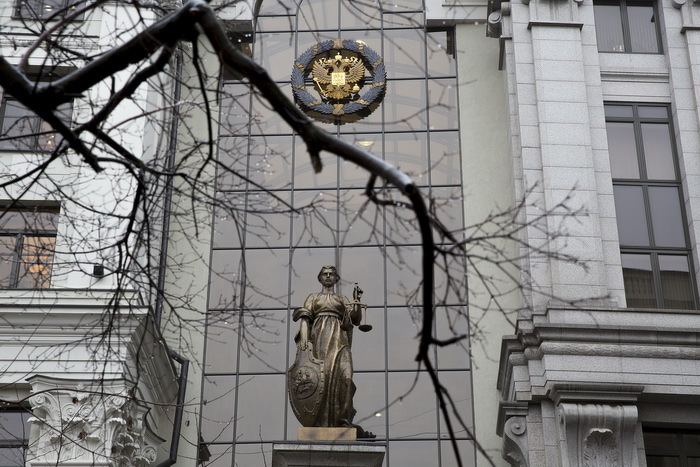
Russia’s Supreme Court cancelled the decision of the Krasnodar Regional Court to dissolve the Krasnodar branch of Yabloko on the grounds of procedural faults and remitted the case for a new reconsideration. Read more »
Yabloko activists in Bashkortostan decided to resume the work of the Gender Faction in the republic. The design was made during a party meeting on 30 October.Read more »
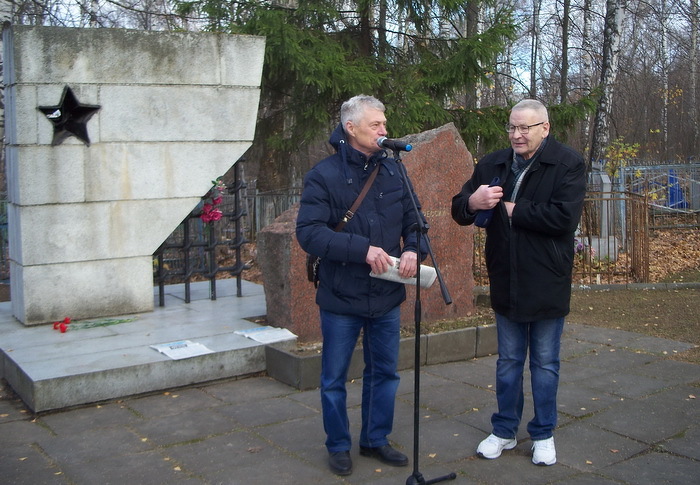
On the Remembrance Day of the Victims of Political Repressions members of the Bashkiria Republic branch of Yabloko visited a memorial in Ufa, brought flowers and commemorated their relatives and friends who suffered from repressions.Read more »
Vladimir Putin will not consider granting a pardon to a Ukranian film director Oleg Sentsov without Sentsov’s personal petition and a recommendation from the governor of the Yamalo-Nenets Autonomous District where the prisoner is serving his sentence. This follows from the response of the Presidential Directorate for Protection of Citizens’ Constitutional Rights to Yabloko Bureau’s appeal. Read more »
On 30 October, the Day of Remembrance of Victims of Political Reprisals, Yabloko activists in Chelyabinsk participated in the Returning the Names ceremony. The memorial ceremony takes place every year to commemorate victims of the Great Terror.Read more »
On 30 October, the Day of Remembrance of Victims of Political Reprisals, activists of the St. Petersburg branch of the Yabloko party took part in the Returning the Names memorial action to pay tribute to the victims of Joseph Stalin’s reprisals.Read more »
On 30 October, the Novosibirsk branch of Yabloko participated in a rally to commemorate the victims of political reprisals. The activists of the party also joined an action against the installation of a monument to Joseph Stalin in Novosibirsk.Read more »
On 30 October, the Barnaul branch of Yabloko participated in a ceremony to commemorate the victims of the Great Terror. Alexander Kondrov, Deputy Chair of the Altai Krai party branch, told those present about his relatives who were repressed. Alexander Goncharenko, Chair of Yabloko in the Altai Krai, said that 150,000 people in the region had been repressed: 40,000 of them had been imprisoned while 15,000 had been executed.
On 28 October, activists of the Nizhny Novgorod branch of Yabloko participated in the Returning the Names memorial action to pay tribute to the victims of Joseph Stalin’s reprisals. According to the participants of the action, it is impossible to bury the most tragic chapters of the Soviet history. Yabloko activists and representatives of other political movements commemorated the residents of Nizhny Novgorod who were repressed during the Soviet times.Read more »
On 29 October, the eve of the Day of Remembrance of Victims of Political Reprisals, leaders and activists of the Yabloko party took part in the Returning the Names memorial action to pay tribute to the victims of Joseph Stalin’s reprisals.
The participants of the action, one after another, read out the names of people executed in Moscow in the years of the Great Terror. In 1937-1938, over 30,000 people were killed in Moscow.
Yabloko Chair Emilia Slabunova read out the name of Kuzma Kochetov, a locksmith who was executed on 27 September 1937. Yabloko leader also spoke about today’s political prisoners – Yuri Dmitriyev, Sergei Koltyrin and Oyub Titiev. She called upon the government to releases them and other political prisoners.
Yabloko Chair Emilia Slabunova (right) and Yabloko Deputy Chair Nikolai Rybakov (centre) Read more »
On 27 October, a launching conference of a book “Yablokov’s Orchard. Memories. Reflections. Expectations” will take place in Moscow. The book is dedicated to Alexei Yablokov, a prominent scientist, environmentalist and a political figure. The Chair of Yabloko’s Green Russia faction passed away in January 2017. He would have turned 85 in October 2018.Read more »




 Read more »