
Congresses and Docs

Memorandum of Political Alternative, an updated version of 1.03.2019

Memorandum of Political Alternative

YABLOKO's Ten Key Programme Issues

THE DEMOCRATIC MANIFESTO

YABLOKO's Political Platform Adopted by the 15th Congress, June 21, 2008

The 18th Congress of YABLOKO

RUSSIA DEMANDS CHANGES! Electoral Program for 2011 Parliamentary Elections.

Key resolutions by the Congress:

On Stalinism and Bolshevism
Resolution. December 21, 2009

On Anti-Ecological Policies of Russia’s Authorities. Resolution of the 15th congress of the YABLOKO party No 253, December 24, 2009

On the Situation in the Northern Caucasus. Resolution of the 15th congress of the YABLOKO party No 252, December 24, 2009

YABLOKO's POLITICAL COMMITTEE DECISIONS:

YABLOKO’s Political Committee: Russian state acts like an irresponsible business corporation conducting anti-environmental policies


Overcoming bolshevism and stalinism as a key factor for Russia¦µ™s transformation in the 21st century


On Russia's Foreign Policies. Political Committee of hte YABLOKO party. Statement, June 26, 2009


On Iran’s Nuclear Problem Resolution by the Political Committee of the YABLOKO party. October 6, 2009


Anti-Crisis Proposals (Housing-Roads-Land) of the Russian United Democratic Party YABLOKO. Handed to President Medvedev by Sergei Mitrokhin on June 11, 2009

Brief Outline of Sergei Mitrokhin’s Report at the State Council meeting. January 22, 2010


Assessment of Russia’s Present Political System and the Principles of Its Development. Brief note for the State Council meeting (January 22, 2010) by Dr.Grigory Yavlinsky, member of YABLOKO’s Political Committee. January 22, 2010


Address of the YABLOKO party to President of the Russian Federation Dmitry Medvedev. Political Committee of the YABLOKO party. October 9, 2009


The 17th Congress of YABLOKO


The 16th Congress of Yabloko

Photo by Sergei Loktionov

The 12th congress of Yabloko


The 11th congress of Yabloko


The 10th congress of Yabloko

Moscow Yabloko
Yabloko for Students
St. Petersburg Yabloko
Khabarovsk Yabloko
Irkutsk Yabloko
Kaliningrad Yabloko(eng)
Novosibirsk Yabloko
Rostov Yabloko
Yekaterinburg Yabloko
(Sverdlovsk Region)

Krasnoyarsk Yabloko
Ulyanovsk Yabloko
Tomsk Yabloko
Tver Yabloko(eng)
Penza Yabloko
Stavropol Yabloko

Action of Support


Archives

SOON!

FOR YOUR INTEREST!

Programme by candidate for the post of Russian President Grigory Yavlinsky. Brief Overview

My Truth

Grigory Yavlinsky at Forum 2000, Prague, 2014

Grigory Yavlinsky : “If you show the white feather, you will get fascism”

Grigory Yavlinsky: a coup is started by idealists and controlled by rascals

The Road to Good Governance

Risks of Transitions. The Russian Experience

Grigory Yavlinsky on the Russian coup of August 1991

A Male’s Face of Russia’s Politics

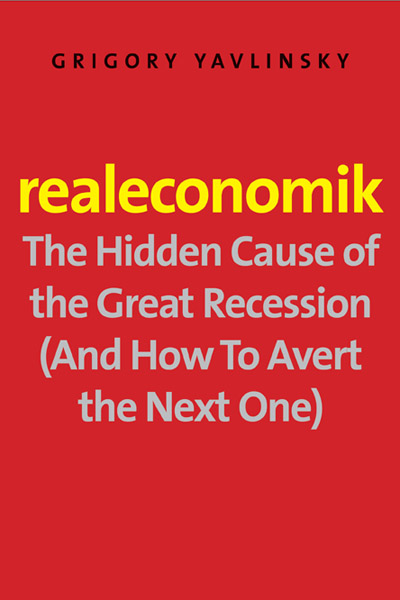
Realeconomik

The Hidden Cause of the Great Recession (And How to Avert the Nest One)

by Dr. Grigory Yavlinsky

What does the opposition want: to win or die heroically?
Moskovsky Komsomolets web-site, July 11, 2012. Interview with Grigory Yavlinsky by Yulia Kalinina.

Lies and legitimacy
The founder of the Yabloko Party analyses the political situation. Article by Grigory Yavlinsky on radio Svoboda. April 6, 2011

Algorithms for Opposing Gender Discrimination: the International and the Russian Experience

Is Modernisation in Russia Possible? Interview with Grigory Yavlinsky and Boris Titov by Yury Pronko, "The Real Time" programme, Radio Finam, May 12, 2010

Grigory Yavlinsky's interview to Vladimir Pozner. The First Channel, programme "Pozner", April 20, 2010 (video and transcript)

Overcoming the Totalitarian Past: Foreign Experience and Russian Problems by Galina Mikhaleva. Research Centre for the East European Studies, Bremen, February 2010.

Grigory Yavlinsky: Vote for the people you know, people you can turn for help. Grigory Yavlinsky’s interview to the Moskovsky Komsomolets newspaper, October 8, 2009

Grigory Yavlinsky: no discords in the tandem. Grigory Yavlinsky’s interview to the Radio Liberty
www.svobodanews.ru
September 22, 2009

A Credit for Half a Century. Interview with Grigory Yavlinsky by Natalia Bekhtereva, Radio Russia, June 15, 2009

Sergei Mitrokhin's Speech at the meeting with US Preseident Barack Obama. Key Notes, Moscow, July 7, 2009

Mitrokhin proposed a visa-free regime between Russia and EU at the European liberal leaders meeting
June 18, 2009

Demodernization
by Grigory Yavlinsky

Reforms that corrupted Russia
By Grigory Yavlinsky, Financial Times (UK), September 3, 2003

Grigory Yavlinsky: "It is impossible to create a real opposition in Russia today."
Moskovsky Komsomolets, September 2, 2003

Alexei Arbatov: What Should We Do About Chechnya?
Interview with Alexei Arbatov by Mikhail Falaleev
Komsomolskaya Pravda, November 9, 2002

Grigory Yavlinsky: Our State Does Not Need People
Novaya Gazeta,
No. 54, July 29, 2002

Grigory Yavlinsky: The Door to Europe is in Washington
Obschaya Gazeta, May 16, 2002

Grigory Yavlinsky's speech.
March 11, 2002

Grigory Yavlinsky's Lecture at the Nobel Institute
Oslo, May 30, 2000

IT IS IMPORTANT!


Position on Some Important Strategic Issues of Russian-American Relations

Moscow, July 7, 2009

The Embrace of Stalinism

By Arseny Roginsky, 16 December 2008

Nuclear Umbrellas and the Need for Understanding: IC Interview With Ambassador Lukin
September 25, 1997

Would the West’s Billions Pay Off?
Los Angeles Times
By Grigory Yavlinsky and Graham Allison
June 3, 1991

“Guided by the motive of love for his country.” Maxim Kruglov questioned in court

Press Release, 17.06.2026

Photo by Daria Kornilova

On 17 June, at a hearing of the Zamoskvoretsky District Court of Moscow, Yabloko Deputy Chairman Maxim Kruglov answered questions from the defence and the prosecution, after which the parties presented their closing arguments. The state prosecution declared that Kruglov’s guilt had been proved and requested that he be sentenced to eight years’ imprisonment.

Answering questions from the defence, Maxim Kruglov quoted his own words on his attitude to the special military operation, spoken during his first night-time interrogation:


“Combat operations are a tragedy; the loss of life must be stopped. This is a great sorrow. A ceasefire agreement must be concluded as soon as possible.”


Yabloko’s Deputy Chairman stands accused of spreading “fake news” about the army in connection with two posts on his Telegram channel and one on VKontakte.


Kruglov recounted that, during his time as a deputy of the Moscow City Duma, many Russian servicemen had come to his constituency surgeries, and he had always helped them, writing appeals and formal requests on their behalf: “We always had a respectful, constructive dialogue”. Among the materials attached to the case file is a character reference from a serviceman who had spent eight months as a prisoner of war in Ukraine.


Maxim Kruglov also acknowledged that he could not understand where the prosecution had found motives of political hatred and hatred towards different social groups. He cited the views of his former colleagues in the Moscow City Duma — Magomed Yandiev of the A Just Russia faction and Yelena Shuvalova of the Communist Party faction — who described him as a person who always sought common ground for dialogue, points of contact, and who had always tried to resolve problems without unnecessary conflict or inflamed tensions.


“It has always been important to me to avoid conflict, to try to disagree in a civilised manner, without resorting to personal attacks or the language of hatred. That is my way of working,” Kruglov stated.


According to the Yabloko Deputy Chairman, in his work he had been guided by Russian legislation, by the party’s principles, and by love for his country, wishing it to be peaceful, prosperous, and flourishing.


Kruglov also drew attention to the fact that, according to the prosecution’s opinion, his criminal intent had arisen two years before the relevant article appeared in the Criminal Code. “Why not 2015, then? Why not 2003, when I joined Yabloko?” the politician asked during the closing arguments.


Maxim Kruglov emphasised that, as a responsible person, he had always tried to cite trustworthy sources:


“If I published something emotional — and politics is an emotional sphere, after all — I tried not to make categorical assertions and to formulate everything as thoughtfully as possible.”


Defence lawyer Natalia Tikhonova noted, for her part, that Kruglov had made the posts he is charged over before the Ministry of Defence had published its rebuttal, and that he could therefore not have known the official position. Tikhonova recalled that the only statement of fact in Kruglov’s posts was UN data on the number of civilian deaths in Ukraine.


In response to the prosecutor’s request for an eight-year custodial sentence for Maxim Kruglov, the lawyer drew attention to the positive character references, which take up almost a third of his criminal case file. Tikhonova declared that the outcome of the proceedings could only be one thing: acquittal.


Kruglov himself recalled the conclusions of the prosecution’s own experts, who had studied his posts and written nothing in their report regarding motives of political hatred. The prosecution’s witnesses, likewise, had said nothing about any political hatred on the part of the Yabloko Deputy Chairman when testifying in court.


The trial will continue on 24 June. Maxim Kruglov will deliver his final statement, after which the court is to pronounce its verdict.