
Congresses and Docs

Memorandum of Political Alternative, an updated version of 1.03.2019

Memorandum of Political Alternative

YABLOKO's Ten Key Programme Issues

THE DEMOCRATIC MANIFESTO

YABLOKO's Political Platform Adopted by the 15th Congress, June 21, 2008

The 18th Congress of YABLOKO

RUSSIA DEMANDS CHANGES! Electoral Program for 2011 Parliamentary Elections.

Key resolutions by the Congress:

On Stalinism and Bolshevism
Resolution. December 21, 2009

On Anti-Ecological Policies of Russia’s Authorities. Resolution of the 15th congress of the YABLOKO party No 253, December 24, 2009

On the Situation in the Northern Caucasus. Resolution of the 15th congress of the YABLOKO party No 252, December 24, 2009

YABLOKO's POLITICAL COMMITTEE DECISIONS:

YABLOKO’s Political Committee: Russian state acts like an irresponsible business corporation conducting anti-environmental policies


Overcoming bolshevism and stalinism as a key factor for Russia¦µ™s transformation in the 21st century


On Russia's Foreign Policies. Political Committee of hte YABLOKO party. Statement, June 26, 2009


On Iran’s Nuclear Problem Resolution by the Political Committee of the YABLOKO party. October 6, 2009


Anti-Crisis Proposals (Housing-Roads-Land) of the Russian United Democratic Party YABLOKO. Handed to President Medvedev by Sergei Mitrokhin on June 11, 2009

Brief Outline of Sergei Mitrokhin’s Report at the State Council meeting. January 22, 2010


Assessment of Russia’s Present Political System and the Principles of Its Development. Brief note for the State Council meeting (January 22, 2010) by Dr.Grigory Yavlinsky, member of YABLOKO’s Political Committee. January 22, 2010


Address of the YABLOKO party to President of the Russian Federation Dmitry Medvedev. Political Committee of the YABLOKO party. October 9, 2009


The 17th Congress of YABLOKO


The 16th Congress of Yabloko

Photo by Sergei Loktionov

The 12th congress of Yabloko


The 11th congress of Yabloko


The 10th congress of Yabloko

Moscow Yabloko
Yabloko for Students
St. Petersburg Yabloko
Khabarovsk Yabloko
Irkutsk Yabloko
Kaliningrad Yabloko(eng)
Novosibirsk Yabloko
Rostov Yabloko
Yekaterinburg Yabloko
(Sverdlovsk Region)

Krasnoyarsk Yabloko
Ulyanovsk Yabloko
Tomsk Yabloko
Tver Yabloko(eng)
Penza Yabloko
Stavropol Yabloko

Action of Support


Archives

SOON!

FOR YOUR INTEREST!

Programme by candidate for the post of Russian President Grigory Yavlinsky. Brief Overview

My Truth

Grigory Yavlinsky at Forum 2000, Prague, 2014

Grigory Yavlinsky : “If you show the white feather, you will get fascism”

Grigory Yavlinsky: a coup is started by idealists and controlled by rascals

The Road to Good Governance

Risks of Transitions. The Russian Experience

Grigory Yavlinsky on the Russian coup of August 1991

A Male’s Face of Russia’s Politics

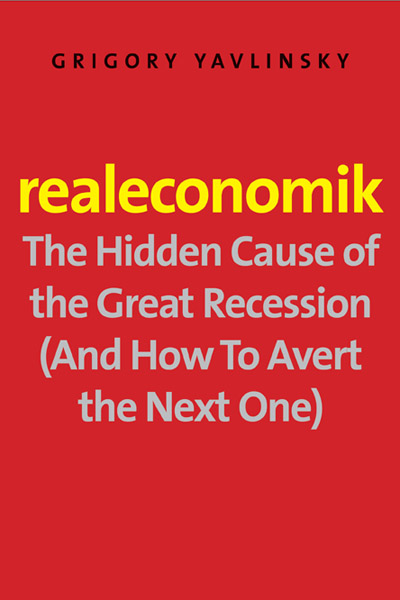
Realeconomik

The Hidden Cause of the Great Recession (And How to Avert the Nest One)

by Dr. Grigory Yavlinsky

What does the opposition want: to win or die heroically?
Moskovsky Komsomolets web-site, July 11, 2012. Interview with Grigory Yavlinsky by Yulia Kalinina.

Lies and legitimacy
The founder of the Yabloko Party analyses the political situation. Article by Grigory Yavlinsky on radio Svoboda. April 6, 2011

Algorithms for Opposing Gender Discrimination: the International and the Russian Experience

Is Modernisation in Russia Possible? Interview with Grigory Yavlinsky and Boris Titov by Yury Pronko, "The Real Time" programme, Radio Finam, May 12, 2010

Grigory Yavlinsky's interview to Vladimir Pozner. The First Channel, programme "Pozner", April 20, 2010 (video and transcript)

Overcoming the Totalitarian Past: Foreign Experience and Russian Problems by Galina Mikhaleva. Research Centre for the East European Studies, Bremen, February 2010.

Grigory Yavlinsky: Vote for the people you know, people you can turn for help. Grigory Yavlinsky’s interview to the Moskovsky Komsomolets newspaper, October 8, 2009

Grigory Yavlinsky: no discords in the tandem. Grigory Yavlinsky’s interview to the Radio Liberty
www.svobodanews.ru
September 22, 2009

A Credit for Half a Century. Interview with Grigory Yavlinsky by Natalia Bekhtereva, Radio Russia, June 15, 2009

Sergei Mitrokhin's Speech at the meeting with US Preseident Barack Obama. Key Notes, Moscow, July 7, 2009

Mitrokhin proposed a visa-free regime between Russia and EU at the European liberal leaders meeting
June 18, 2009

Demodernization
by Grigory Yavlinsky

Reforms that corrupted Russia
By Grigory Yavlinsky, Financial Times (UK), September 3, 2003

Grigory Yavlinsky: "It is impossible to create a real opposition in Russia today."
Moskovsky Komsomolets, September 2, 2003

Alexei Arbatov: What Should We Do About Chechnya?
Interview with Alexei Arbatov by Mikhail Falaleev
Komsomolskaya Pravda, November 9, 2002

Grigory Yavlinsky: Our State Does Not Need People
Novaya Gazeta,
No. 54, July 29, 2002

Grigory Yavlinsky: The Door to Europe is in Washington
Obschaya Gazeta, May 16, 2002

Grigory Yavlinsky's speech.
March 11, 2002

Grigory Yavlinsky's Lecture at the Nobel Institute
Oslo, May 30, 2000

IT IS IMPORTANT!


Position on Some Important Strategic Issues of Russian-American Relations

Moscow, July 7, 2009

The Embrace of Stalinism

By Arseny Roginsky, 16 December 2008

Nuclear Umbrellas and the Need for Understanding: IC Interview With Ambassador Lukin
September 25, 1997

Would the West’s Billions Pay Off?
Los Angeles Times
By Grigory Yavlinsky and Graham Allison
June 3, 1991

Grigory Yavlinsky presents report at the Vatican on the end of an era and the prospect of Europe from Lisbon to Vladivostok

Press Release, 24.04.2026

Photo: Mario Draghi, Jeffrey Sachs and Grigory Yavlinsky / Photo by Pontifical Academy of Social Sciences

From 14 to 16 April, Grigory Yavlinsky attended the plenary session of the Pontifical Academy of Social Sciences (Casina Pio IV, Vatican City) at its personal invitation. The session was held on the theme of “The Use of Power: Legitimacy, Democracy and the Revision of the International Order”.

The Academy was founded in 1994 on the initiative of Pope John Paul II. Its members — leading scholars from around the world — number approximately 40 academics and professors in the fields of economics, sociology, political science, history, theology and other humanities, some of whom combine academic work with Church ministry. The session was also attended by prominent former politicians and public intellectuals, among them Mario Draghi, leading economist and former Prime Minister of Italy.


The Academy’s mission is not only scholarly research, but above all the application of intellectual and humanitarian expertise to developing proposals for addressing the key challenges of our time — the preservation of peace, social development and the improvement of human life.


In his address, Grigory Yavlinsky presented an analysis of developments in the world, characterising them as “the end of an era and the world’s descent into chaos”. He argued that the use of force by contemporary politicians was being treated as the decisive factor in international relations, and that the danger of “a real large-scale war, which would almost immediately acquire a nuclear character, is being irresponsibly ignored and concealed behind short-term political interests”.


In Yavlinsky’s view, the situation is being seriously compounded by the explosive development of artificial intelligence and digital technologies. A new reality is taking shape, in which the future is determined by technology, Big Data and the actors behind them who seek political influence. In these conditions, the prevailing principle is that only those communities which achieve supremacy in advanced technologies will survive and flourish.


Politics, in this context, is being transformed into populism, which rapidly turns into what Yavlinsky termed “ochlo-populism” — a combination of responsiveness to the fleeting moods of social media and the servicing of narrow elite interests. Under these conditions, democratic procedures are being used to produce regimes that rely to a significant degree on the manipulation of public opinion through digital technologies.


All of this, Yavlinsky emphasised, leads to the central problem: “the devaluation of the significance of human life, freedom and dignity”.


People’s desire to escape chaos and restore order carries the risk of a “Führer” coming to power, as has already occurred in history, Yavlinsky argued. Finding a different way out depends, in his view, on defining a long-term strategy and developing a positive vision — an understanding of what kind of future is desirable: “where we want to go and how”.


In his report, the politician and economist Grigory Yavlinsky set out two central propositions.


First, “the human being, the individual, must become the cornerstone of economics, politics and international relations”. In his view, “the second half of the twenty-first century must be the century of the individual, of freedom and the soul, and not an era of digital technologies and artificial intelligence”.


Second, Grigory Yavlinsky defined the strategic vision for Europe as the creation of a unified economic and political space and a common security architecture from Lisbon to Vladivostok. He estimated that achieving this goal could take twenty to thirty years. Nevertheless, this is precisely the path that is necessary, he argued, for the preservation of Europe’s historically established nations, Russia, and the new states formed over the past thirty-five years, and for the development of a future Europe as an independent economic and political actor at the global level, capable of competing with the United States and China.


Yavlinsky characterised the present moment as a historical juncture at which the collapse of the former world order “will require the conscious construction of the foundations of a new world”, and expressed his conviction that “the countries, statesmen and politicians who recognise this fact… will be in a position to play a leading role in the new world… by virtue of their capacity to think strategically and to understand a future in which human values come to the fore”.


The speaker thanked Pope Leo XIV for convening the conference and expressed his solidarity with and support for the Pope’s position on a number of important global developments.


Participants in the plenary session also discussed with Grigory Yavlinsky the current key challenges facing the world economy and global politics.


Full text of Grigory Yavlinsky’s address to the plenary session of the Academy

https://www.yavlinsky.ru/article/moralnyj-dolg/


Full text of the report “Participation in Contemporary Political Life and Institutional Reform”

https://www.yavlinsky.ru/article/uchastie-v-sovremennoj-politicheskoj-zhizni-i-institutsionalnye-reformy-smysl-i-tsel/