



Congresses and Docs

Memorandum of Political Alternative, an updated version of 1.03.2019

Memorandum of Political Alternative

YABLOKO's Ten Key Programme Issues

THE DEMOCRATIC MANIFESTO

YABLOKO's Political Platform Adopted by the 15th Congress, June 21, 2008

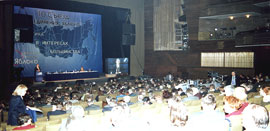
The 18th Congress of YABLOKO

RUSSIA DEMANDS CHANGES! Electoral Program for 2011 Parliamentary Elections.

Key resolutions by the Congress:

On Stalinism and Bolshevism
Resolution. December 21, 2009

On Anti-Ecological Policies of Russia’s Authorities. Resolution of the 15th congress of the YABLOKO party No 253, December 24, 2009

On the Situation in the Northern Caucasus. Resolution of the 15th congress of the YABLOKO party No 252, December 24, 2009

YABLOKO's POLITICAL COMMITTEE DECISIONS:

YABLOKO’s Political Committee: Russian state acts like an irresponsible business corporation conducting anti-environmental policies


Overcoming bolshevism and stalinism as a key factor for Russia¦µ™s transformation in the 21st century


On Russia's Foreign Policies. Political Committee of hte YABLOKO party. Statement, June 26, 2009


On Iran’s Nuclear Problem Resolution by the Political Committee of the YABLOKO party. October 6, 2009


Anti-Crisis Proposals (Housing-Roads-Land) of the Russian United Democratic Party YABLOKO. Handed to President Medvedev by Sergei Mitrokhin on June 11, 2009

Brief Outline of Sergei Mitrokhin’s Report at the State Council meeting. January 22, 2010


Assessment of Russia’s Present Political System and the Principles of Its Development. Brief note for the State Council meeting (January 22, 2010) by Dr.Grigory Yavlinsky, member of YABLOKO’s Political Committee. January 22, 2010


Address of the YABLOKO party to President of the Russian Federation Dmitry Medvedev. Political Committee of the YABLOKO party. October 9, 2009


The 17th Congress of YABLOKO


The 16th Congress of Yabloko

Photo by Sergei Loktionov

The 12th congress of Yabloko


The 11th congress of Yabloko


The 10th congress of Yabloko

Moscow Yabloko
Yabloko for Students
St. Petersburg Yabloko
Khabarovsk Yabloko
Irkutsk Yabloko
Kaliningrad Yabloko(eng)
Novosibirsk Yabloko
Rostov Yabloko
Yekaterinburg Yabloko
(Sverdlovsk Region)

Krasnoyarsk Yabloko
Ulyanovsk Yabloko
Tomsk Yabloko
Tver Yabloko(eng)
Penza Yabloko
Stavropol Yabloko

Action of Support


Archives

SOON!

FOR YOUR INTEREST!

Programme by candidate for the post of Russian President Grigory Yavlinsky. Brief Overview

My Truth

Grigory Yavlinsky at Forum 2000, Prague, 2014

Grigory Yavlinsky : “If you show the white feather, you will get fascism”

Grigory Yavlinsky: a coup is started by idealists and controlled by rascals

The Road to Good Governance

Risks of Transitions. The Russian Experience

Grigory Yavlinsky on the Russian coup of August 1991

A Male’s Face of Russia’s Politics

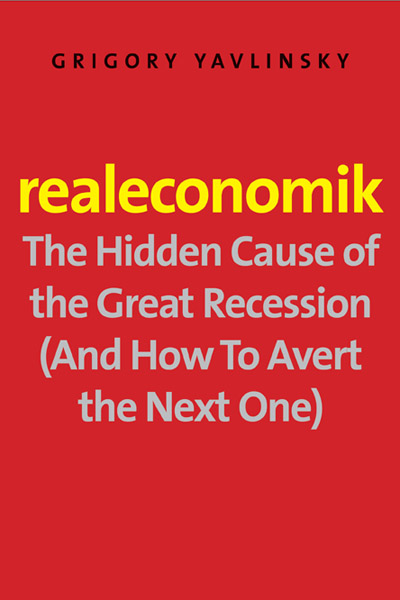
Realeconomik

The Hidden Cause of the Great Recession (And How to Avert the Nest One)

by Dr. Grigory Yavlinsky

What does the opposition want: to win or die heroically?
Moskovsky Komsomolets web-site, July 11, 2012. Interview with Grigory Yavlinsky by Yulia Kalinina.

Lies and legitimacy
The founder of the Yabloko Party analyses the political situation. Article by Grigory Yavlinsky on radio Svoboda. April 6, 2011

Algorithms for Opposing Gender Discrimination: the International and the Russian Experience

Is Modernisation in Russia Possible? Interview with Grigory Yavlinsky and Boris Titov by Yury Pronko, "The Real Time" programme, Radio Finam, May 12, 2010

Grigory Yavlinsky's interview to Vladimir Pozner. The First Channel, programme "Pozner", April 20, 2010 (video and transcript)

Overcoming the Totalitarian Past: Foreign Experience and Russian Problems by Galina Mikhaleva. Research Centre for the East European Studies, Bremen, February 2010.

Grigory Yavlinsky: Vote for the people you know, people you can turn for help. Grigory Yavlinsky’s interview to the Moskovsky Komsomolets newspaper, October 8, 2009

Grigory Yavlinsky: no discords in the tandem. Grigory Yavlinsky’s interview to the Radio Liberty
www.svobodanews.ru
September 22, 2009

A Credit for Half a Century. Interview with Grigory Yavlinsky by Natalia Bekhtereva, Radio Russia, June 15, 2009

Sergei Mitrokhin's Speech at the meeting with US Preseident Barack Obama. Key Notes, Moscow, July 7, 2009

Mitrokhin proposed a visa-free regime between Russia and EU at the European liberal leaders meeting
June 18, 2009

Demodernization
by Grigory Yavlinsky

Reforms that corrupted Russia
By Grigory Yavlinsky, Financial Times (UK), September 3, 2003

Grigory Yavlinsky: "It is impossible to create a real opposition in Russia today."
Moskovsky Komsomolets, September 2, 2003

Alexei Arbatov: What Should We Do About Chechnya?
Interview with Alexei Arbatov by Mikhail Falaleev
Komsomolskaya Pravda, November 9, 2002

Grigory Yavlinsky: Our State Does Not Need People
Novaya Gazeta,
No. 54, July 29, 2002

Grigory Yavlinsky: The Door to Europe is in Washington
Obschaya Gazeta, May 16, 2002

Grigory Yavlinsky's speech.
March 11, 2002

Grigory Yavlinsky's Lecture at the Nobel Institute
Oslo, May 30, 2000

IT IS IMPORTANT!


Position on Some Important Strategic Issues of Russian-American Relations

Moscow, July 7, 2009

The Embrace of Stalinism

By Arseny Roginsky, 16 December 2008

Nuclear Umbrellas and the Need for Understanding: IC Interview With Ambassador Lukin
September 25, 1997

Would the West’s Billions Pay Off?
Los Angeles Times
By Grigory Yavlinsky and Graham Allison
June 3, 1991

A free Internet. Free Telegram. Free people

We demand an end to the restriction of Russian citizens’ constitutional right to freedom of information and communication

Decision by the Yabloko Bureau, 21.04.2026

Since February 2026, Roskomnadzor (the Federal Service for Supervision of Communications, Information Technology and Mass Media) has been systematically degrading the functioning of Telegram, one of the most important communication platforms. WhatsApp and the video-hosting service YouTube were blocked at an earlier stage. The government is seriously discussing the blocking of AI resources that many Russians use for work and everyday tasks. Large-scale Internet outages are being recorded across the country.

By introducing restrictions and threatening outright bans, the authorities are depriving dozens of millions of citizens of access to sources of information and reliable, affordable communication with family and their loved ones, as well as the ability to communicate in emergencies.


Almost everything needed for normal life today depends on the Internet: work and study chats, running a business, accessing services, leisure and entertainment, and information about the country and the world.


All of this is being placed under threat by the actions of the authorities under the pretexts of “security” and “combating fraud”.


Instead of fighting crime, the authorities are blocking citizens’ means of communication, thereby restricting our rights to privacy, information, and communication.


We understand that in the context of the tragic conflict between Russia and Ukraine, and the dangers posed to citizens by drone strikes, localised restrictions on Internet and mobile connectivity may be necessary. But localised restrictions only — strictly limited in time and geography, to where and when a genuine danger arises.


The authorities’ desire to use these pretexts to ban Telegram and WhatsApp outright has nothing to do with security.


It is about throwing the country back a quarter of a century, to the era of payphones, pagers, and fax machines.


It is about state control over our correspondence and browsing.


It is about censorship and coercion into switching to MAX, the state-owned “national messenger,” which offers no protection for the privacy of correspondence or personal life.


The order to ban messaging apps comes from those who live in the past and do not use the Internet themselves — for whom the internal communications network with their subordinates and folders of reports confirming that everything is going smoothly and to plan are quite sufficient. And these bans are carried out by those who trawl social media for sedition instead of catching real criminals.


We are categorically opposed to Russia becoming a dictatorship in the mould of North Korea, where citizens are deprived of freedom of information.


We demand that the Russian authorities cease their violation of Article 29 of the Constitution, which guarantees the right to freely seek, receive, transmit, produce, and disseminate information.


We demand an end to the throttling and blocking of the Telegram and WhatsApp messaging apps, and the restoration of their normal functioning.


We have no intention of surrendering our rights to freedom of information and privacy in exchange for an illusion of security, and we will defend them by every lawful means.


Yabloko will contest the State Duma elections in part to secure a mandate from citizens to fight for the lifting of restrictions on communications and the Internet.


Communication and information are our right, not a privilege granted at the discretion of the authorities.


Join Yabloko’s appeal, sign it and share it on social media, in chats, at school and at work, and send it to family, neighbours, and friends.


We invite all those who stand for a free Internet to join Yabloko: volunteer at the elections and take part in the election campaign.


The formation of a Yabloko faction in the State Duma would be a real step towards freedom and respect for the human dignity of Russia’s citizens.


Only by standing together can we achieve results.


Yabloko stands for freedom of communication!

Yabloko stands for a free Internet!