
Congresses and Docs

Memorandum of Political Alternative, an updated version of 1.03.2019

Memorandum of Political Alternative

YABLOKO's Ten Key Programme Issues

THE DEMOCRATIC MANIFESTO

YABLOKO's Political Platform Adopted by the 15th Congress, June 21, 2008

The 18th Congress of YABLOKO

RUSSIA DEMANDS CHANGES! Electoral Program for 2011 Parliamentary Elections.

Key resolutions by the Congress:

On Stalinism and Bolshevism
Resolution. December 21, 2009

On Anti-Ecological Policies of Russia’s Authorities. Resolution of the 15th congress of the YABLOKO party No 253, December 24, 2009

On the Situation in the Northern Caucasus. Resolution of the 15th congress of the YABLOKO party No 252, December 24, 2009

YABLOKO's POLITICAL COMMITTEE DECISIONS:

YABLOKO’s Political Committee: Russian state acts like an irresponsible business corporation conducting anti-environmental policies


Overcoming bolshevism and stalinism as a key factor for Russia¦µ™s transformation in the 21st century


On Russia's Foreign Policies. Political Committee of hte YABLOKO party. Statement, June 26, 2009


On Iran’s Nuclear Problem Resolution by the Political Committee of the YABLOKO party. October 6, 2009


Anti-Crisis Proposals (Housing-Roads-Land) of the Russian United Democratic Party YABLOKO. Handed to President Medvedev by Sergei Mitrokhin on June 11, 2009

Brief Outline of Sergei Mitrokhin’s Report at the State Council meeting. January 22, 2010


Assessment of Russia’s Present Political System and the Principles of Its Development. Brief note for the State Council meeting (January 22, 2010) by Dr.Grigory Yavlinsky, member of YABLOKO’s Political Committee. January 22, 2010


Address of the YABLOKO party to President of the Russian Federation Dmitry Medvedev. Political Committee of the YABLOKO party. October 9, 2009


The 17th Congress of YABLOKO


The 16th Congress of Yabloko

Photo by Sergei Loktionov

The 12th congress of Yabloko


The 11th congress of Yabloko


The 10th congress of Yabloko

Moscow Yabloko
Yabloko for Students
St. Petersburg Yabloko
Khabarovsk Yabloko
Irkutsk Yabloko
Kaliningrad Yabloko(eng)
Novosibirsk Yabloko
Rostov Yabloko
Yekaterinburg Yabloko
(Sverdlovsk Region)

Krasnoyarsk Yabloko
Ulyanovsk Yabloko
Tomsk Yabloko
Tver Yabloko(eng)
Penza Yabloko
Stavropol Yabloko

Action of Support


Archives

SOON!

FOR YOUR INTEREST!

Programme by candidate for the post of Russian President Grigory Yavlinsky. Brief Overview

My Truth

Grigory Yavlinsky at Forum 2000, Prague, 2014

Grigory Yavlinsky : “If you show the white feather, you will get fascism”

Grigory Yavlinsky: a coup is started by idealists and controlled by rascals

The Road to Good Governance

Risks of Transitions. The Russian Experience

Grigory Yavlinsky on the Russian coup of August 1991

A Male’s Face of Russia’s Politics

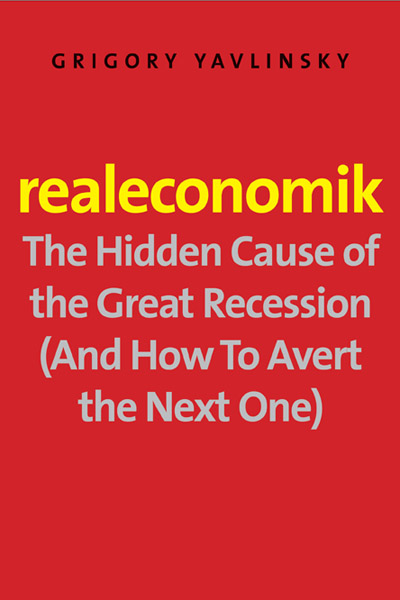
Realeconomik

The Hidden Cause of the Great Recession (And How to Avert the Nest One)

by Dr. Grigory Yavlinsky

What does the opposition want: to win or die heroically?
Moskovsky Komsomolets web-site, July 11, 2012. Interview with Grigory Yavlinsky by Yulia Kalinina.

Lies and legitimacy
The founder of the Yabloko Party analyses the political situation. Article by Grigory Yavlinsky on radio Svoboda. April 6, 2011

Algorithms for Opposing Gender Discrimination: the International and the Russian Experience

Is Modernisation in Russia Possible? Interview with Grigory Yavlinsky and Boris Titov by Yury Pronko, "The Real Time" programme, Radio Finam, May 12, 2010

Grigory Yavlinsky's interview to Vladimir Pozner. The First Channel, programme "Pozner", April 20, 2010 (video and transcript)

Overcoming the Totalitarian Past: Foreign Experience and Russian Problems by Galina Mikhaleva. Research Centre for the East European Studies, Bremen, February 2010.

Grigory Yavlinsky: Vote for the people you know, people you can turn for help. Grigory Yavlinsky’s interview to the Moskovsky Komsomolets newspaper, October 8, 2009

Grigory Yavlinsky: no discords in the tandem. Grigory Yavlinsky’s interview to the Radio Liberty
www.svobodanews.ru
September 22, 2009

A Credit for Half a Century. Interview with Grigory Yavlinsky by Natalia Bekhtereva, Radio Russia, June 15, 2009

Sergei Mitrokhin's Speech at the meeting with US Preseident Barack Obama. Key Notes, Moscow, July 7, 2009

Mitrokhin proposed a visa-free regime between Russia and EU at the European liberal leaders meeting
June 18, 2009

Demodernization
by Grigory Yavlinsky

Reforms that corrupted Russia
By Grigory Yavlinsky, Financial Times (UK), September 3, 2003

Grigory Yavlinsky: "It is impossible to create a real opposition in Russia today."
Moskovsky Komsomolets, September 2, 2003

Alexei Arbatov: What Should We Do About Chechnya?
Interview with Alexei Arbatov by Mikhail Falaleev
Komsomolskaya Pravda, November 9, 2002

Grigory Yavlinsky: Our State Does Not Need People
Novaya Gazeta,
No. 54, July 29, 2002

Grigory Yavlinsky: The Door to Europe is in Washington
Obschaya Gazeta, May 16, 2002

Grigory Yavlinsky's speech.
March 11, 2002

Grigory Yavlinsky's Lecture at the Nobel Institute
Oslo, May 30, 2000

IT IS IMPORTANT!


Position on Some Important Strategic Issues of Russian-American Relations

Moscow, July 7, 2009

The Embrace of Stalinism

By Arseny Roginsky, 16 December 2008

Nuclear Umbrellas and the Need for Understanding: IC Interview With Ambassador Lukin
September 25, 1997

Would the West’s Billions Pay Off?
Los Angeles Times
By Grigory Yavlinsky and Graham Allison
June 3, 1991

Yevgeny Gontmakher on overcoming social stratification: We need a different economy

Press Release, 14.07.2025

Photo by Alexander Manzyuk, Kommersant

The  Esli Byt Tochnym (To Be Precise) project has published an analysis of Russians’ incomes from 2022 to the first quarter of 2025, according to which inequality is growing in the country. Despite sanctions for some and state assistance for others, the rich have become richer and the poor poorer. Researchers note that the growth of inequality in 2023 in our country is record-breaking since the early nineties, while in 2022 inequality sharply decreased due to economic shocks for the rich and state support for the poor, over 2023-2024 the Gini index (an indicator of the level of inequality in society) increased by 2.5%,  to 0.408.

The incomes of the richest group are growing faster than those of other Russians for the first time in ten years. This happened due to sharp salary growth, especially in highly paid sectors, as well as benefits from high deposit rates available primarily to the wealthy. Among the poorest, the share of wages in income is lower, and households are predominantly composed of children, students and pensioners, explain the authors of the “To Be Precise” project.


Economist and member of the Political Committee of the Yabloko party Yevgeny Gontmakher notes that the figures characterising inequality in Russia during the special military operation are not surprising. Starting from 2023, when the military-industrial complex was fired up, the incomes of those connected to it sharply increased.


The so-called “wage race” in its most substantial part is ensured by direct budget injections into military production and generous payments to active participants of the special military operation. Although payments to special military operation participants do make some of the poor somewhat richer, they still do not reduce inequality, Yevgeny Gontmakher explains:


“A person worked in a village or small town, earning 30,000 – 40,000 roubles per month, and after signing a contract with the Ministry of Defence, besides a lump sum payment (from hundreds of thousands to several million roubles), he receives more than 200,000 roubles monthly. Meanwhile, nothing special is happening in the civilian sector – its ‘freezing’ is already noticeable, including regarding wages. And inflation further devalues these incomes.


One must not forget about pensioners either – the income level of those who no longer work has long stagnated, despite planned indexations. Low-income families with children have gained somewhat in income in recent years, as they have begun receiving special benefits, but the general trend towards deepening inequality has not changed because of this.


As for the level of income differentiation in Russia now, it is, certainly, higher than citizens would like to see. Therefore, a feeling of ongoing social injustice is widespread in society.”


Earlier, Yabloko presented a detailed analysis of the socio-economic situation in the country and specific proposals for overcoming inequality, noting that the longer the special military operation continues, the more difficult it will be to cope with poverty in the future.


“We are convinced that the initial and necessary step for overcoming poverty is concluding a ceasefire agreement, normalising relations with Western countries, modernising the economy and ensuring real freedom of entrepreneurship,” Yabloko stated.


Doctor of Economics Yevgeny Gontmakher confirms that overcoming inequality is impossible without political changes:


“We should not, certainly, be talking about a programme of ‘take everything away and redistribute’. We need a different economy in which freedom of entrepreneurship (primarily small and medium-scale) will be a reality, the state budget will be genuinely socially oriented rather than military-police oriented. And this, in turn, is impossible without radical change of all domestic and foreign policy in Russia, which the Yabloko party insists upon.”


Yevgeny Gontmakher is

a member of the Federal Political Committee of Yabloko. Doctor of Economics.