
Congresses and Docs

Memorandum of Political Alternative, an updated version of 1.03.2019

Memorandum of Political Alternative

YABLOKO's Ten Key Programme Issues

THE DEMOCRATIC MANIFESTO

YABLOKO's Political Platform Adopted by the 15th Congress, June 21, 2008

The 18th Congress of YABLOKO

RUSSIA DEMANDS CHANGES! Electoral Program for 2011 Parliamentary Elections.

Key resolutions by the Congress:

On Stalinism and Bolshevism
Resolution. December 21, 2009

On Anti-Ecological Policies of Russia’s Authorities. Resolution of the 15th congress of the YABLOKO party No 253, December 24, 2009

On the Situation in the Northern Caucasus. Resolution of the 15th congress of the YABLOKO party No 252, December 24, 2009

YABLOKO's POLITICAL COMMITTEE DECISIONS:

YABLOKO’s Political Committee: Russian state acts like an irresponsible business corporation conducting anti-environmental policies


Overcoming bolshevism and stalinism as a key factor for Russia¦µ™s transformation in the 21st century


On Russia's Foreign Policies. Political Committee of hte YABLOKO party. Statement, June 26, 2009


On Iran’s Nuclear Problem Resolution by the Political Committee of the YABLOKO party. October 6, 2009


Anti-Crisis Proposals (Housing-Roads-Land) of the Russian United Democratic Party YABLOKO. Handed to President Medvedev by Sergei Mitrokhin on June 11, 2009

Brief Outline of Sergei Mitrokhin’s Report at the State Council meeting. January 22, 2010


Assessment of Russia’s Present Political System and the Principles of Its Development. Brief note for the State Council meeting (January 22, 2010) by Dr.Grigory Yavlinsky, member of YABLOKO’s Political Committee. January 22, 2010


Address of the YABLOKO party to President of the Russian Federation Dmitry Medvedev. Political Committee of the YABLOKO party. October 9, 2009


The 17th Congress of YABLOKO


The 16th Congress of Yabloko

Photo by Sergei Loktionov

The 12th congress of Yabloko


The 11th congress of Yabloko


The 10th congress of Yabloko

Moscow Yabloko
Yabloko for Students
St. Petersburg Yabloko
Khabarovsk Yabloko
Irkutsk Yabloko
Kaliningrad Yabloko(eng)
Novosibirsk Yabloko
Rostov Yabloko
Yekaterinburg Yabloko
(Sverdlovsk Region)

Krasnoyarsk Yabloko
Ulyanovsk Yabloko
Tomsk Yabloko
Tver Yabloko(eng)
Penza Yabloko
Stavropol Yabloko

Action of Support


Archives

SOON!

FOR YOUR INTEREST!

Programme by candidate for the post of Russian President Grigory Yavlinsky. Brief Overview

My Truth

Grigory Yavlinsky at Forum 2000, Prague, 2014

Grigory Yavlinsky : “If you show the white feather, you will get fascism”

Grigory Yavlinsky: a coup is started by idealists and controlled by rascals

The Road to Good Governance

Risks of Transitions. The Russian Experience

Grigory Yavlinsky on the Russian coup of August 1991

A Male’s Face of Russia’s Politics

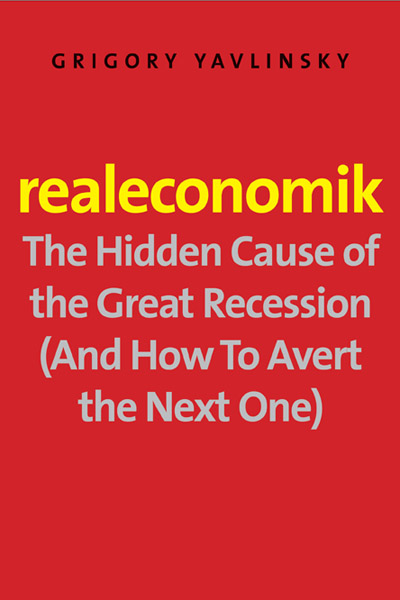
Realeconomik

The Hidden Cause of the Great Recession (And How to Avert the Nest One)

by Dr. Grigory Yavlinsky

What does the opposition want: to win or die heroically?
Moskovsky Komsomolets web-site, July 11, 2012. Interview with Grigory Yavlinsky by Yulia Kalinina.

Lies and legitimacy
The founder of the Yabloko Party analyses the political situation. Article by Grigory Yavlinsky on radio Svoboda. April 6, 2011

Algorithms for Opposing Gender Discrimination: the International and the Russian Experience

Is Modernisation in Russia Possible? Interview with Grigory Yavlinsky and Boris Titov by Yury Pronko, "The Real Time" programme, Radio Finam, May 12, 2010

Grigory Yavlinsky's interview to Vladimir Pozner. The First Channel, programme "Pozner", April 20, 2010 (video and transcript)

Overcoming the Totalitarian Past: Foreign Experience and Russian Problems by Galina Mikhaleva. Research Centre for the East European Studies, Bremen, February 2010.

Grigory Yavlinsky: Vote for the people you know, people you can turn for help. Grigory Yavlinsky’s interview to the Moskovsky Komsomolets newspaper, October 8, 2009

Grigory Yavlinsky: no discords in the tandem. Grigory Yavlinsky’s interview to the Radio Liberty
www.svobodanews.ru
September 22, 2009

A Credit for Half a Century. Interview with Grigory Yavlinsky by Natalia Bekhtereva, Radio Russia, June 15, 2009

Sergei Mitrokhin's Speech at the meeting with US Preseident Barack Obama. Key Notes, Moscow, July 7, 2009

Mitrokhin proposed a visa-free regime between Russia and EU at the European liberal leaders meeting
June 18, 2009

Demodernization
by Grigory Yavlinsky

Reforms that corrupted Russia
By Grigory Yavlinsky, Financial Times (UK), September 3, 2003

Grigory Yavlinsky: "It is impossible to create a real opposition in Russia today."
Moskovsky Komsomolets, September 2, 2003

Alexei Arbatov: What Should We Do About Chechnya?
Interview with Alexei Arbatov by Mikhail Falaleev
Komsomolskaya Pravda, November 9, 2002

Grigory Yavlinsky: Our State Does Not Need People
Novaya Gazeta,
No. 54, July 29, 2002

Grigory Yavlinsky: The Door to Europe is in Washington
Obschaya Gazeta, May 16, 2002

Grigory Yavlinsky's speech.
March 11, 2002

Grigory Yavlinsky's Lecture at the Nobel Institute
Oslo, May 30, 2000

IT IS IMPORTANT!


Position on Some Important Strategic Issues of Russian-American Relations

Moscow, July 7, 2009

The Embrace of Stalinism

By Arseny Roginsky, 16 December 2008

Nuclear Umbrellas and the Need for Understanding: IC Interview With Ambassador Lukin
September 25, 1997

Would the West’s Billions Pay Off?
Los Angeles Times
By Grigory Yavlinsky and Graham Allison
June 3, 1991

15 years since the Fukushima nuclear disaster

Statement by the Bureau of the Yabloko’s Green Russia Faction, 11.03.2026

Photo: A Yabloko party event in Petrozavodsk, Karelia, on the first anniversary of the Fukushima disaster, 2012 / Photo by the Yabloko Press Service

The disaster at Japan’s Fukushima nuclear power plant has entered the history of nuclear energy as one of the largest man-made catastrophes in human history. The explosions at three reactor units, combined with the release of radionuclides into coastal waters, contaminated vast areas with hazardous materials. An enormous number of people were exposed to radiation. The consequences of the Fukushima disaster have not been eliminated. Radioactive water continues to flow into the world’s oceans. Untreated nuclear materials remain a potential danger to the populations of South-East Asia. Radionuclides, entering the food chains of marine ecosystems, are spreading far beyond the region. The threat of internal radiation exposure persists for millions of people in Japan and other countries, including Russia.

There are no safe technologies for generating nuclear energy in the world today. Fukushima is one accident in a succession of similar events. Russia has lived through the Chernobyl catastrophe and the long-concealed disaster at Chelyabinsk-40 (in Ozyorsk). Large territories remain uninhabitable and dangerous to this day. Many of those affected in Russia and elsewhere have not received the support they were entitled to. The state readily “forgets” its debts to the liquidators, their families, and all those who were exposed to radiation and lost the ability to return to their home land.


Beyond the obvious catastrophes, nuclear energy is accompanied by the problem of hazardous nuclear waste. Unable to dispose of it effectively, governments and lobbyists leave everything accumulated to future generations, storing it, as a rule, on the territory of the Russian Federation. Rosatom [the Russian atomic agency] proposes to “bury and forget” nuclear waste, presenting the imports of spent fuels from abroad as a competitive advantage. The world, though aware of the dangers of “peaceful” nuclear power, allows itself to be lulled by fantasies about the development of entirely safe reactors.


The Green Russia Faction of the Yabloko party declares that ignoring the problems generated by an unquestioning belief in nuclear energy as the only option is irresponsible and immoral. It is unconscionable to plan new disasters in the face of the evidence left by previous ones. Russia must halt the construction of new nuclear facilities in favour of developing renewable energy. The Yabloko party is categorically opposed to the importation of spent nuclear fuels from other countries into Russia, regarding it as a threat to the safety of Russian citizens, and, in particular, to the residents of its final destinations: the Chelyabinsk and Krasnoyarsk regions.


The state must make every effort to carry out the environmental rehabilitation of Russian territories contaminated with radionuclides. Russian citizens affected by the Chernobyl and other nuclear disasters, along with their families, must receive adequate state support to restore their health and live with dignity.


The state is obliged to guarantee every Russian citizen the right to nuclear and radiation safety.


The Green Russia Faction of the Yabloko party considers it essential that nuclear risks and threats should not be forgotten in any sphere of public life.


Bureau of the Green Russia Faction of the Yabloko party