

Nikolai Rybakov: Yabloko candidates at elections of any level conduct a political campaign on the key issue of the country’s development
RIA Tomsk, 24.07.2025
Interview by Valentina Ankudinova

Photo: Nikolai Rybakov / Photo by the Yabloko Press Service
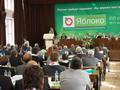
The Yabloko party has determined candidates for elections to the Tomsk City Duma, which will take place in September. On the eve, a pre-election conference took place in the city, attended by party Chairman Nikolai Rybakov. In an interview with RIA Tomsk, he spoke about what qualities deputies should possess, how budget policies can be changed, and why it is impossible to solve key urban problems without peace in the country.
Question: In 2020, following the results of elections to the Tomsk duma, [the ruling] United Russia lost its majority, receiving only 11 mandates out of 37. In connection with this, many people closely followed work of this City Duma. How can you now, five years later, assess the results of its work?
Nikolai Rybakov: As completely typical for unjustified hopes that could not be justified. Because this is a rare, but not unique case in Russia when [the ruling] United Russia [party] does not have a majority in some regional or local parliament. But in 100% of cases, all decisions are passed anyway as if they had an overwhelming majority.
Unfortunately, when the Tomsk City Duma discussed not only all-Russian issues but also city issues, all the supposedly opposition parties, on which hopes were placed, voted in exactly the same way [as the ruling party]. Both on the abolition of direct mayoral elections, and on waste reform, and on budgets – everything as needed by the executive power.
This is proof of our position against “smart voting”, when people vote for any other party except United Russia. Because we always say: you should vote for the position that is close to you, that you consider correct, and not try to fall to card manipulations. If you want to vote for an alternative – you should vote for an alternative, not for [the integral] part of the ruling party, just under a different name.
I am very grateful to colleagues from Yabloko because they took such a position. But the authorities have instruments that allow them to pressure the opposition. When there is no political possibility to win, administrative resources come into play. Which is what happened to our deputies. There were four, and only one finally remained.
Question: Are you talking about the early deprivation of mandates of Yevgeny Kaverzin, David Avetyan, and Artyom Kanaryov?
Nikolai Rybakov. Yes. After all, even when they resist the system, as in the case of Yevgeny Kaverzin, the system still achieves this. After all, the Tomsk Duma initially refused to deprive him of his powers. And then they went through the court, and if not from the first try, then from the second try they achieved their goal.
We understand that fighting such a system is difficult, but it is possible, and we have no other path. And people like Yevgeny Kaverzin, who don’t give up, are an excellent example for all of us. And the one who fights and doesn’t retreat always wins.
Breaking through the wall
Question: What, in your view, prevented the Tomsk Duma from achieving greater positive results?
Nikolai Rybakov: Simply all deputies should realise that they are elected by citizens in honest and free elections. Because in our political system, a person must make a very difficult choice for himself. Why are you going into politics: for your personal interests or to change the life of the city and country according to your convictions?
Unfortunately, life shows that few fall into the second category. It is hard, it is risky, and it is dangerous. And the first way is simple and understandable.
People think: why should I spend my life on high goals and values when I can engage in Realpolitik. We see this both at the international level and in city politics. And, unfortunately, the majority chooses the path of “grab everything from life, and right now”. Because going against is like breaking through a wall.
Therefore, when a person comes from a pseudo-opposition party – they won’t be different. It is no use to expect something from them.
Question: I have encountered the opinion that citizens themselves are becoming disillusioned with the representative power as an institution and that it is difficult to find worthy candidates for deputies. Do you confirm this trend? Who are your candidates in Tomsk?
Nikolai Rybakov: We know that other parties have such problems. People ask: “Why to engage? The administration decides everything anyway.” Their logic is understandable: why be a deputy if you can make a deal with the administration? Then it is easier to go straight to the administration.
But we initially have a different approach. We tell any person who wants to run in elections – whether to a village council or to the State Duma – that now any elections are political elections in Russia.
We go to elections with a political programme to give citizens the opportunity to vote for our principles: for peace and freedom. This is not just discussing problems of a specific constituency – this is a political campaign on the key issue of the country’s development. Because what is happening now affects both Russia and the world.
Our candidates are people who see problems on the ground, including in Tomsk. But one theme unites them all – the need of achieving peace, and the need of political reforms. They want to change the country’s direction of movement. They want people to be able to live, study, do business, and teach, without looking back at what might happen to them. To live freely. To speak, think, and read.
Question: Voting in these elections will again be conducted in several days and with remote electronic voting. How do you feel about this?
Nikolai Rybakov: I don’t hide it: I feel bad about it. This reduces the possibility of control. I have been in politics for many years and have seen how violations occur when storing ballots during multi-day voting. We have all been through this.
Until trust in elections is restored, until there is confidence that votes are counted honestly, voting should be one-day, on paper, and at polling stations. That is what I think. Electronic voting can be discussed for overseas polling stations, where it is really difficult to get to. But not in Russia, where it is 300 metres to walk to a polling station.
I am not against technology. But technology should serve people, not the other way around. And here it is an instrument of manipulation. Turnout does not grow from them [these manipulations], but trust in elections falls. People become disillusioned. This is visible if you talk to people. Both statistics and conversations confirm this.
Question: Do you plan to train observers in connection with this?
Nikolai Rybakov. Certainly. We do this every time. And I have enormous respect both for those who go as candidates and for those who go to observe. These are strong, and courageous people. We will train them, direct them, and support them. This is very important.
“30% + 30% + 30%”
Question: Let’s move to Tomsk problems. Now the mayor’s office receives a large number of writs of execution for the resettlement of emergency housing. This increases the budget deficit, because of this other expenses are cut. What, in your view, can the new City Duma do in such a situation?
Nikolai Rybakov: I believe that the path of increasing the budget deficit to solve real problems leads to a dead end. Because you still won’t resettle all the houses this way, there won’t be enough resources. It is unrealistic. Here we need a systemic solution. Municipalities, even such large ones as Tomsk, cannot exist with microscopic financing.
Now the consolidated budget of all municipalities in the country is about 5% of the entire budget system. Over 50%, even more already, is the federal budget. And it is spent disproportionately – mainly on security structures, and on the army. Vladimir Putin himself already talks about this. He admits that defence spending is enormous.
We believe that redistribution is needed. Our concept of budget policies is the principle of “30%+30%+30%”: a third of taxes goes to the federal centre, a third to regions, and another third to municipalities. Only then will cities be able to work normally and solve their problems.
Then there won’t be such scales of shabby housing, and second shifts in schools. After all, now, in 2025, more than 30% of schools in the region still work in two shifts. If resources are redistributed, these issues can be resolved. But waiting for the federal centre to give up powers and money is useless. Both in Moscow and St Petersburg – their municipalities have long been deprived of real powers.
And Tomsk still have them.. And they need to be exercised. It is just that now there is no money for everything. At the same time, even in such a situation, we see completely absurd steps: purchasing cars and red carpets [for the regional and city authorities]. Certainly, we will speak out against this. But the situation can only be changed systemically through tax redistribution.
Question: What other tasks, in your opinion, should the new City Duma set for itself?
Nikolai Rybakov: Firstly, to become a political body that has its own voice both in Tomsk and in the country. Tomsk is a city of exceptional importance. It is not for nothing that it is called the Siberian Athens. This is a young and intellectual city. You can see that a large number of intelligent, active, and creative people live here. This atmosphere shouldn’t be trampled, it should be developed. Not only externally, but also internally, and at the level of city politics.
And I hope that a strong voice will appear in the new City Duma so that we could finally come to peace. For people to stop dying. To stop this dehumanisation that we observe. Because this is needed by the whole country. And if this happens, then resources will be freed up – for creation and development.
And in Tomsk there are topics that are personally important to me. This is, firstly, the environmental situation. Pollution of Tomsk rivers: the Ushayka, and the Tomi. It does not fit in my head that in 2025 in a half-million city there can be sewage discharges into the river.
The second problem is the absence of real separate waste collection and recycling. Waste reform is a systemic error. It didn’t solve problems, but simply destroyed business in this sphere. The pressure on business was colossal. As a result, almost everywhere it ceased to exist.
The third theme is wooden architecture. This is an absolute uniqueness of Tomsk. I have been to many regions, but there is nothing like what is in Tomsk anywhere. This is heritage that we lose every year. (Academician Dmitry) Likhachev in the book “Thoughts on Life. Letters on Good” wrote that if a person is indifferent to historical monuments of his country, then it means he is indifferent to his country.
And what do we see in Tomsk? Demolition, destruction, and losses. It is impossible to restore these old houses later in the form they were in. And if the city authorities don’t deal with this now, if there’s no initiative at the City Duma level – it will simply disappear.
I have already appealed to the Ministry of Culture, but, certainly, the initiative should also come from the city authorities. We have great hope that the City Duma can become an independent body that will raise these issues.
But – and this is extremely important – all this is possible only if the priority of state policies changes. Now the priority is military. We believe this is the deepest mistake. And the country pays for it.
Question: Tomsk residents traditionally vote for Yabloko better than voters in other regions. What do you connect this with?
Nikolai Rybakov: [I connect it] With the fact that Tomsk is a young, educated, and intelligent city. There are many students here, many people who think about the future. People, who want to stay here, in their country, to live, create, develop, and be free here. And they understand: to live in a normal country, you need to change it. Turn it onto a path where people are at the centre.
And here Yabloko has a very serious history. Certianly, Oleg Pletnyov – both as head of the regional branch and as Chairman of the City Duma – left a strong mark. These traditions continue. I am very glad that young people come to us, especially from the education sphere. This is very valuable.
Therefore, the choice of Tomsk residents is important and very dear to us. This is a signal that we are still doing the right thing. Thank you for this.
Posted: July 24th, 2025 under Economy, Education and Science, Elections, Environmental Policies, Freedom of Speech, Governance, Healthcare, Housing and Utilities Reform, Human Rights, Political Parties, Protection of Environment, Regional and Local Elections, Regional and Local Elections 2025, Regional policies and Local Self-Governing, Russian Economy, Social Policies, Yabloko Against the Government's Pension Reform, YABLOKO Against the Parties of Power, Yabloko's Regional Branches, Youth Policies, Без рубрики.